In the ultra-luxury residential communities and towering commercial landscapes of Dubai, an HVAC system is far more than a standard home appliance—it is a critical piece of building infrastructure. Operating in an environment where ambient summer temperatures can hit extreme peaks, a property’s climate control framework experiences continuous, high-intensity thermal stress.
When a multi-zone Variable Refrigerant Volume (VRV/VRF) network, a centralized packaged system, or a heavy-duty chilled water loop drops in performance, the impact on indoor air quality, structural asset warranties, and monthly utility tariffs is immediate. Securing high-performance cooling demands moving away from superficial, temporary fixes and embracing true engineering-led diagnostic care.
1. Thermodynamic Loop Calibration: Balancing Subcooling and Superheat
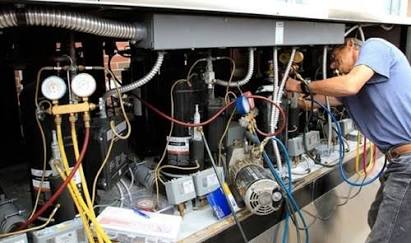
A primary issue facing neglected HVAC systems in the UAE is an imbalanced refrigerant charge. Simply connecting a gas bottle and topping up the system by guesswork is an unstable approach that often triggers severe, hidden damage to the mechanical core.
- The Overcharging Hazard: Introducing too much refrigerant raises head pressures inside the condenser. This causes the system to draw high-amperage currents and risks sending unvaporized liquid refrigerant back into the compressor oil reservoir, washing out mechanical lubrication.
- The Undercharging Strain: Conversely, a low refrigerant level—usually caused by undetected micro-leaks along copper lines—forces the compressor to run continuously at elevated temperatures, accelerating motor-winding insulation breakdown.
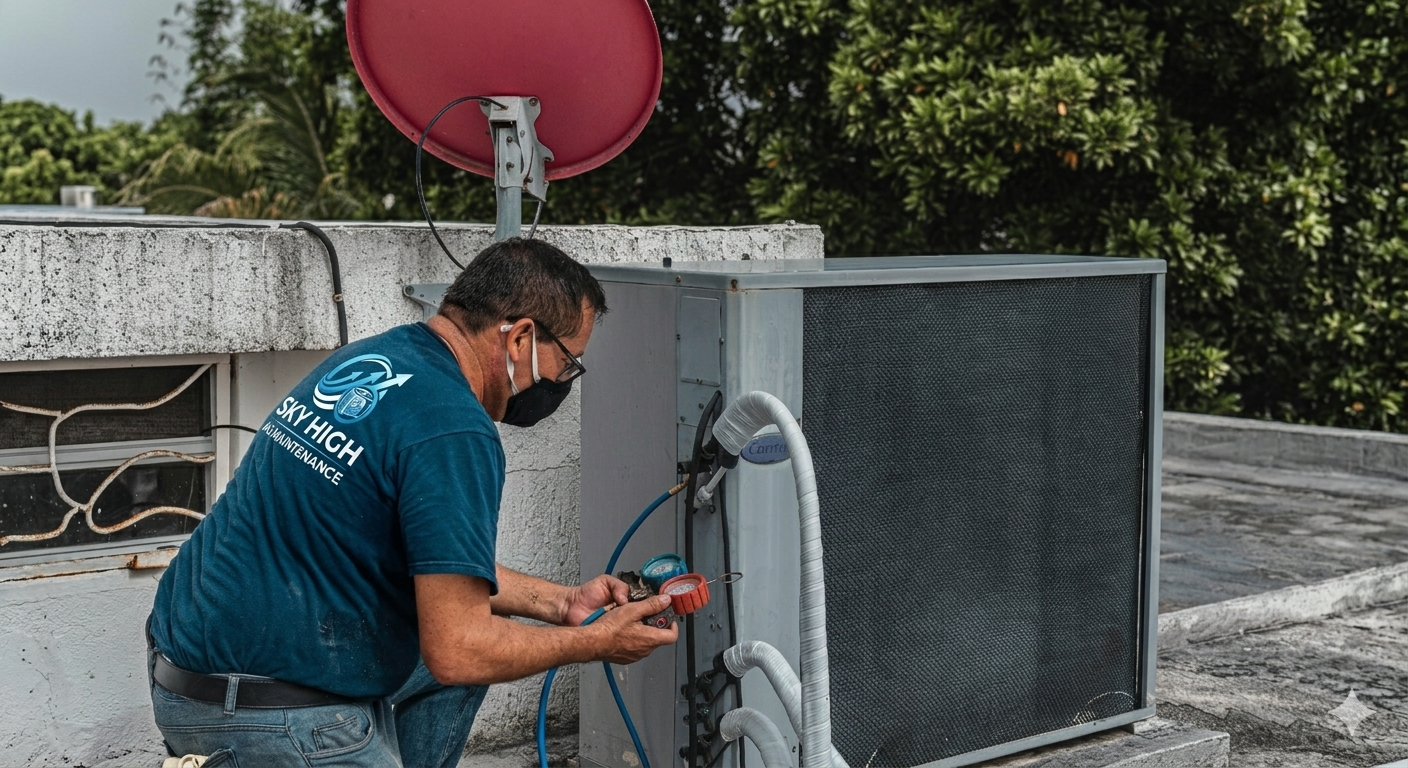
- The Engineered Solution: Certified technical teams utilize advanced digital manifold gauges to measure exact subcooling and superheat parameters in real-time. This ensures the chemical charge matches factory weight specifications, keeping the refrigeration loop running safely within its thermodynamic envelope.
2. Aerodynamic Static Pressure and Ducted System Care
For large villas and commercial fit-outs, quiet and uniform cooling relies heavily on fluid dynamics. Air handler blower fans must move air against the internal resistance of the property’s ventilation layout, a variable known as total external static pressure.Over time, fine desert sand and airborne grease slip past standard filters, coating internal fan blades and blocking fiberglass or galvanized sheet metal duct lines. This air restriction causes static pressure to spike, slowing down fan velocity and creating stagnant, warm air pockets across rooms.
Comprehensive HVAC maintenance involves inspecting the structural integrity of hidden duct runs, sealing air leaks with heavy-duty mastic and aluminum foil tape, and utilizing anemometers to tune supply grilles and linear slot diffusers. This ensures uniform, high-velocity, and draft-free air distribution throughout your space.
3. High-Pressure Chemical Cleansing of Heat Exchangers
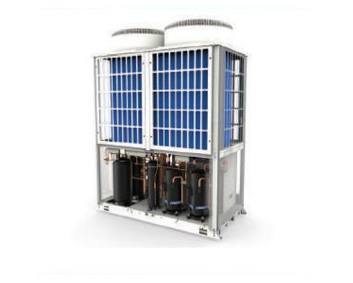
Air conditioning operates on the basic principle of heat rejection. Your indoor coils absorb indoor heat, and your outdoor condenser fins reject that heat into the outside atmosphere. However, the unique environmental combination of high humidity and coastal dust in Dubai acts as a dense, insulating blanket over aluminum fins.
Standard surface rinsing with a water hose only pushes dirt deeper into the core of the coil, compressing the debris blockages. A professional intervention requires applying specialized, biodegradable chemical cleaning agents directly to the deep fins of the coils. Once the grime is chemically loosened, a precision-regulated, high-pressure water wash strips away baked-on sand and organic film, instantly dropping compressor strain and significantly lowering monthly electricity bills.
4. Electronic Controls and Electrical Path Restoration
The electrical panels powering high-capacity central climate systems face intense thermal fatigue. Weak components and compromised electrical pathways are the leading causes of sudden system shutdowns during peak heatwaves.
| Component Inspected | Common Wear and Tear Symptom | Engineered Rectification Protocol |
|---|---|---|
| Start/Run Capacitors | Microfarad (µF) rating drops below baseline. | Replacement with certified components to prevent motor stalling. |
| Magnetic Contactors | Pitting, arcing, and carbon buildup on contacts. | Cleaning contact surfaces or swapping modules to stop voltage drops. |
| Terminal Blocks & Wiring | Loose connections caused by thermal cycles. | Re-terminating wires and torquing screws to eliminate resistance. |
| Inverter PCB Logic Boards | “E-type” data bus loop communication faults. | Diagnosing data lines, checking step-motors, and updating logic controllers. |
5. Sanitization of Condensate Infrastructure
Because high-capacity AC systems extract massive amounts of moisture from humid air, internal drainage trays and pipelines rapidly accumulate algae and thick organic slime. If left untreated, blocked drain lines cause water overflows, which can ruin custom wall finishes, luxury interior carpentry, and expensive gypsum ceiling installations.
Clearing out condensate infrastructure requires using high-pressure nitrogen flushes to purge sludge completely from the pipeline. The primary drain pans are then treated with slow-dissolving, anti-bacterial tablets to stop future microbial growth and protect your property’s interior finishes.
Partnering with Certified Technical Experts
Managing a luxury property or commercial asset requires a technical partner that understands the financial costs of downtime and inefficient equipment. General handymen and uncertified freelancers often lack the advanced tools and deep training needed to diagnose modern inverter-driven variable-speed systems or large central ducted configurations.
Investing in a rigorous preventative maintenance protocol is an insurance policy for your climate control assets. By tracking electrical currents with clamp meters, checking structural loads, and keeping heat exchangers spotlessly clean, you ensure your building infrastructure remains a cool, energy-efficient sanctuary all year round.
Optimize Your Technical Infrastructure Today
Don’t wait for a total breakdown to address your property’s climate control system. Protect your assets, enhance indoor air quality, and bring down your monthly operational costs by establishing an engineered preventative maintenance plan with a team of trusted technical specialists.